
Honey Sriracha Salmon Bowl with Air Fryer Salmon Bites
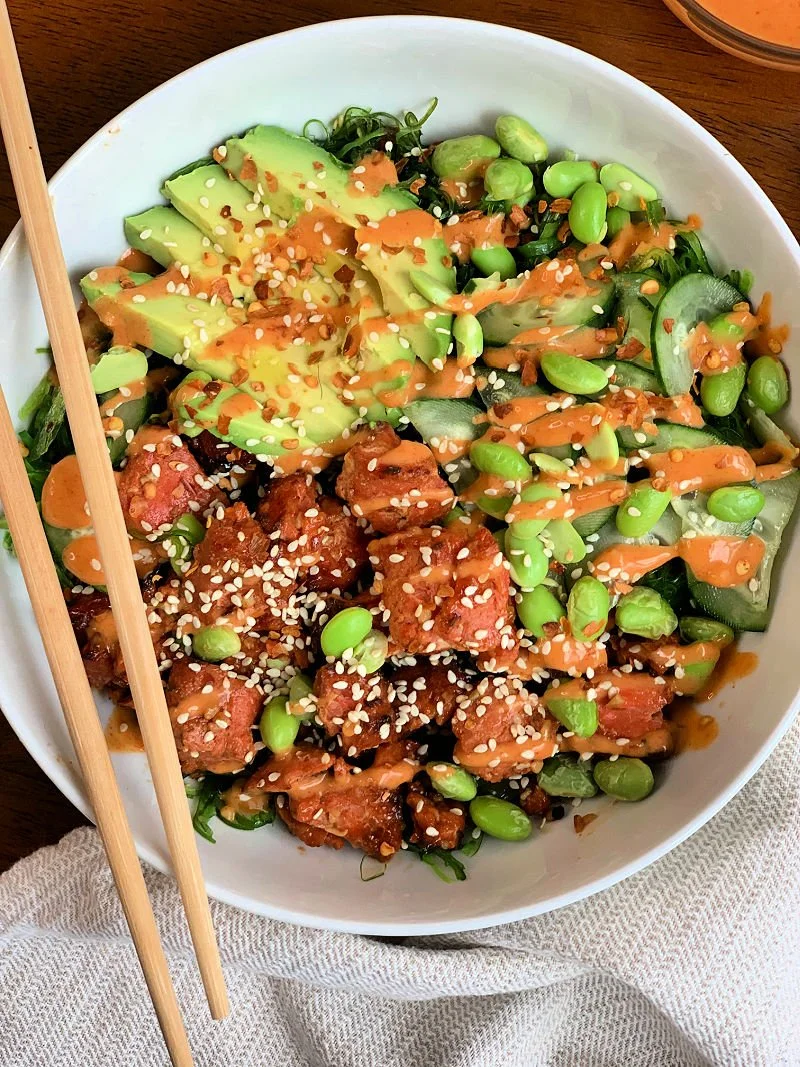
/If you love a salmon roll but you're not about to attempt rolling sushi at home on a Tuesday night — this bowl is the answer. All the flavors of your favorite salmon roll, deconstructed into a bowl that takes 40 minutes and requires exactly zero rolling skills.
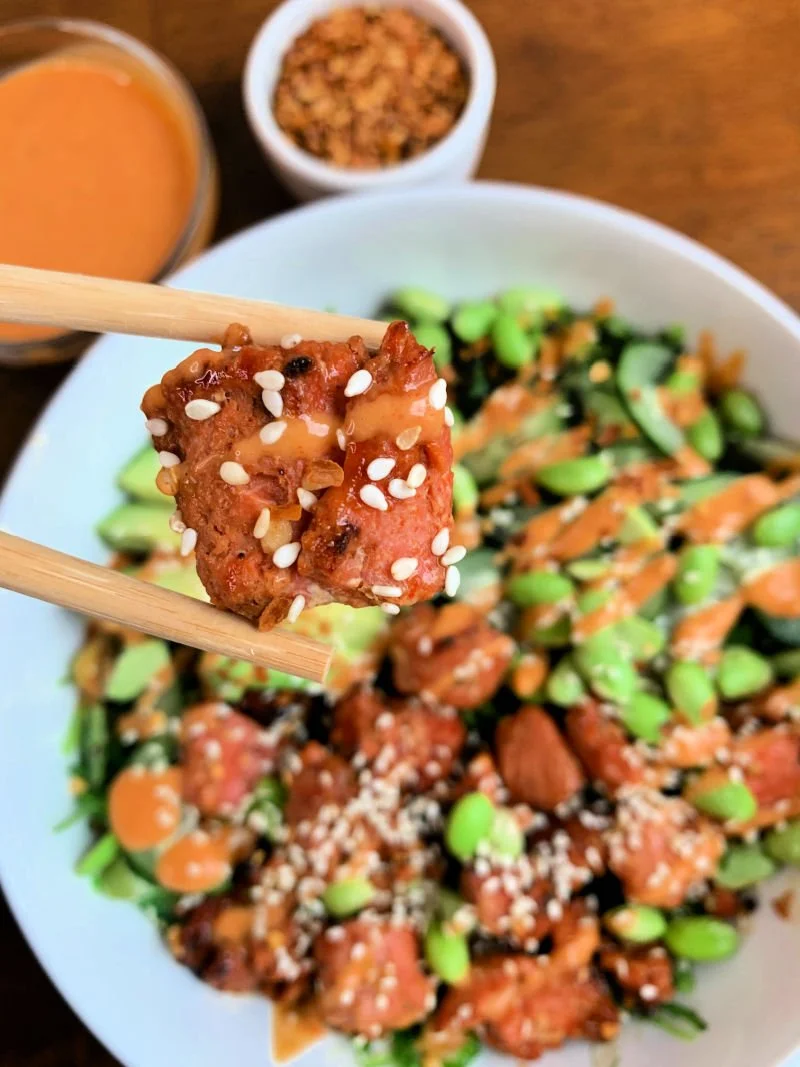
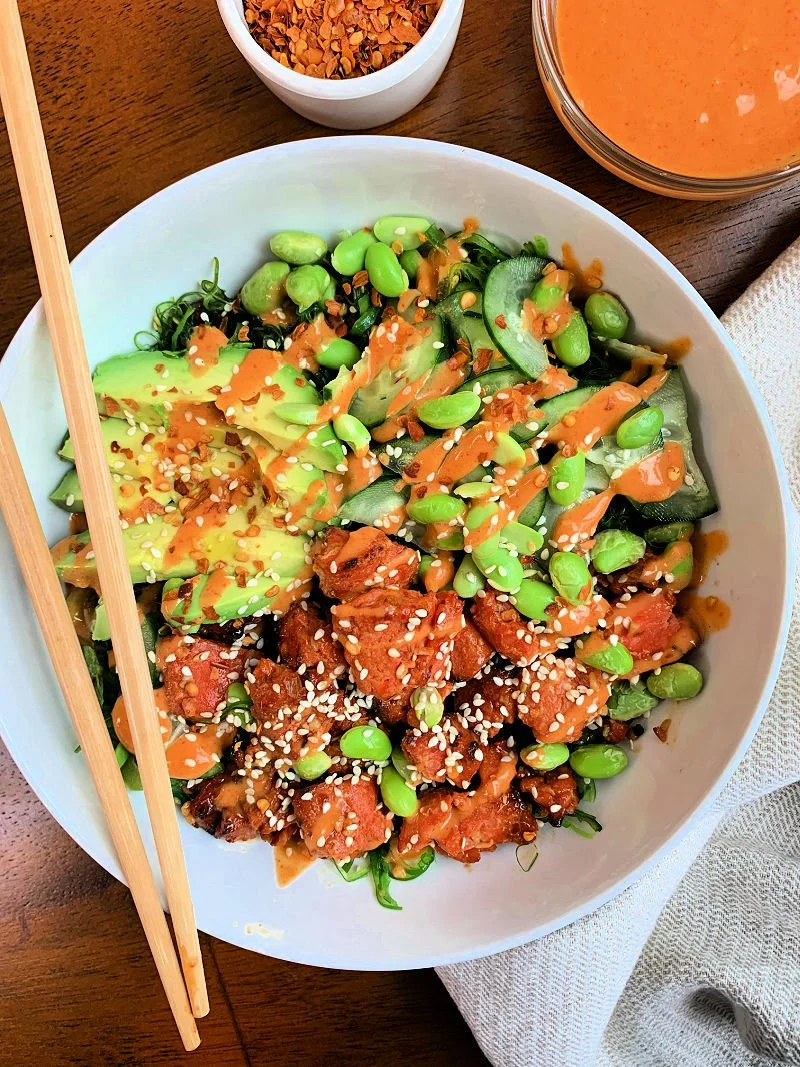
The air fryer salmon bites are the star. They marinate in a honey sriracha coconut aminos sauce for 20-30 minutes, then go in the air fryer at 400°F for 9 minutes and come out caramelized, slightly sticky, and completely addictive. The salmon bowl itself comes together in minutes — seaweed salad, thinly sliced cucumber, edamame, and the salmon bites, drizzled with a spicy sriracha mayo that ties the whole thing together.
Low carb, gluten-free, and genuinely one of the most satisfying dinners I make. The kind of recipe that looks impressive and tastes like it took effort when it absolutely did not.
Why you'll love this honey sriracha salmon bowl
Air fryer salmon bites ready in 9 minutes • Bold honey sriracha marinade with only 6 ingredients • The spicy sriracha mayo drizzle is everything • Low carb and gluten-free • Make the salmon ahead for easy meal prep • Ready in 40 minutes including marinating time • High protein — salmon is 22g protein per 4 oz serving
Ingredients
Honey Sriracha Salmon Bites
1 lb wild-caught salmon, skin removed and cut into 1-inch cubes
3 tablespoons coconut aminos or soy sauce
2 tablespoons sriracha
3 tablespoons water
3 tablespoons honey
3 teaspoons garlic, minced — about 3 cloves
Spicy Sriracha Mayo
1/2 cup mayo — Chosen Foods Avocado Oil Mayo recommended
3 tablespoons sriracha — start with 2 and add more to taste
Juice from 1/2 lemon — about 1 tablespoon
1 teaspoon garlic, minced
Pinch of salt
Salmon Sushi Bowl Assemly (per bowl)
1/4 cup seaweed salad — found at most grocery stores in the refrigerated seafood section or Asian foods aisle
1/2 cup edamame, shelled and thawed if frozen
1/2 medium cucumber, thinly sliced into rounds
Sesame seeds — a generous sprinkle
Red pepper flakes — to taste
Drizzle of coconut aminos
Cauliflower rice or sushi rice as your base — see the section below
Salmon Buying Guide
Wild-caught salmon is worth the extra dollar here — it has a cleaner flavor, firmer texture when cubed, and a better nutritional profile (higher omega-3s, lower in contaminants) than farmed Atlantic salmon. Look for wild-caught sockeye or coho at the seafood counter. Frozen wild-caught salmon works perfectly in this recipe — just thaw completely and pat dry before cubing. Costco sells excellent frozen wild-caught salmon in bulk.
What Is Coconut Aminos — and Why Use It Instead of Soy Sauce?
If you haven't cooked with coconut aminos before, it's one of those pantry swaps worth knowing about.
Coconut aminos is a sauce made from the fermented sap of coconut blossoms. It looks and behaves almost exactly like soy sauce — same dark color, same liquid consistency, similar umami depth — but with a few key differences:
It's gluten-free. Traditional soy sauce is made with wheat, which makes it off-limits if you're avoiding gluten. Tamari is a gluten-free soy sauce alternative, but coconut aminos is the option with the cleanest ingredients.
Lower sodium. Coconut aminos has about 65% less sodium than soy sauce. You get the umami flavor without the salt overload.
Slightly sweeter. Coconut aminos has a subtle sweetness that works particularly well in marinades and dressings. It's a bit milder than soy sauce, which is why we pair it with sriracha and honey in this recipe — the three together create a balanced, layered sauce.
You can find coconut aminos at Whole Foods, Target, most Trader Joe's, and Amazon. Coconut Secret is the most widely available brand.
Can I substitute soy sauce or tamari?
Yes. If you're not gluten-free, regular soy sauce works — the flavor will be slightly saltier and less sweet, so reduce to 2 tablespoons and add an extra teaspoon of honey to compensate. Tamari (gluten-free soy sauce) is the closest 1:1 substitute if you can't find coconut aminos.
How to Make the Honey Sriracha Salmon Marinade
The marinade does two things: it flavors the salmon and it creates the sticky, slightly caramelized coating that forms on the outside of each bite in the air fryer. Here's how to get both right:
Whisk the marinade. In a medium bowl, whisk together the coconut aminos, sriracha, water, honey, and minced garlic until fully combined. Taste it — it should be sweet, spicy, and savory all at once. Adjust sriracha up for more heat, honey up for more sweetness.
Cube the salmon. Remove the skin from the salmon fillet if it hasn't been done already (run a sharp knife between the flesh and skin). Cut into roughly 1-inch cubes — uniform size ensures even cooking in the air fryer.
Marinate. Add the salmon cubes to the bowl and gently toss to coat. Cover and refrigerate for at least 20-30 minutes. Don't marinate longer than 2 hours — the acidity in the sauce will start to 'cook' the salmon and change the texture, similar to ceviche.
How to Cook Honey Sriracha Salmon Bites in the Air Fryer
Nine minutes at 400°F is the target — here's exactly how to make sure they come out perfectly every time:
Preheat your air fryer. Preheat to 400°F for 3-5 minutes. A preheated air fryer ensures the salmon starts cooking immediately and the exterior caramelizes instead of steaming.
Arrange the salmon. Remove salmon cubes from the marinade, shaking off the excess (but leaving enough coating for flavor). Arrange in a single layer in the air fryer basket — do not overlap or stack. Work in batches if needed. Crowding drops the temperature and causes the salmon to steam instead of caramelize.
Air fry. Cook at 400°F for 8-10 minutes. At 8 minutes the salmon will be just cooked through with a slightly translucent center — this is perfect for salmon lovers who prefer it slightly medium. At 9-10 minutes it's fully cooked through. Check at 8 minutes and add time based on your preference.
Check for doneness. Perfectly cooked salmon flakes easily with a fork. The outside should look slightly caramelized and sticky from the honey in the marinade. Internal temp should reach 125°F for medium, 145°F for fully cooked through.
Don't skip resting. Let the salmon bites rest 2-3 minutes before adding to the bowl — this lets the juices redistribute and keeps each bite moist rather than dry.
How to Make Spicy Sriracha Mayo
This sauce takes 2 minutes and it's what makes the whole bowl. Don't skip it.
Combine ingredients. In a small bowl, mix together 1/2 cup avocado oil mayo, 3 tablespoons sriracha, the juice from half a lemon, 1 teaspoon minced garlic, and a pinch of salt.
Whisk until smooth. Stir vigorously until the sauce is completely uniform — no streaks of mayo or sriracha.
Taste and adjust. This sauce is spicy as written. If you want less heat, start with 2 tablespoons of sriracha. Want more citrus? Add the juice from the full lemon. More garlic? Add another half teaspoon.
Refrigerate. Make this ahead if possible — even 10 minutes in the fridge lets the flavors meld. It gets better the longer it sits.
The sauce keeps in an airtight jar in the fridge for up to 1 week. Make a double batch — you'll put it on everything.
Why avocado oil mayo?
Most grocery store mayo is made with soybean or canola oil — processed seed oils that aren't the best choice as a daily ingredient. Chosen Foods Avocado Oil Mayo uses avocado oil and has a clean ingredient list with no added sugar. It also has a slightly richer flavor that makes this sriracha mayo taste noticeably better than the version made with standard Hellmann's. Sir Kensington's avocado oil mayo is another excellent option at most Whole Foods.
How to Assemble a Honey Sriracha Salmon Sushi Bowl
Assembly is the fun part — and the order matters for both presentation and flavor balance:
Start with the base. Add cauliflower rice or sushi rice to the bottom of your bowl — about 1 cup per serving. See the base options section below for the carb breakdown on each choice.
Add the seaweed salad. Spoon about 1/4 cup of seaweed salad onto one side of the bowl. It has a briny, slightly sweet flavor and a chewy texture that pairs beautifully with the salmon.
Add cucumber. Fan the thinly sliced cucumber around the edge of the bowl or in its own section — about 1/2 a medium cucumber per bowl, sliced thin enough to be pliable but thick enough to hold their shape.
Add edamame. About 1/2 cup shelled edamame per bowl. These add protein, a pop of green color, and a mild flavor that balances the heat of the sriracha.
Add the salmon bites. Arrange the honey sriracha salmon bites in the center — these are the star, so give them center stage.
Drizzle the sriracha mayo. Using a spoon or squeeze bottle, drizzle the spicy sriracha mayo generously over the entire bowl — not just the salmon. Every element should get some sauce.
Finish. Drizzle a small amount of coconut aminos over the bowl. Sprinkle with sesame seeds and red pepper flakes. Serve immediately.
Low Carb vs Regular Rice Base — What to Use
The bowl components are low carb and gluten-free. Your base choice determines the overall carb count:
Cauliflower rice (low carb)
About 3g net carbs per cup. The most neutral choice that lets the honey sriracha salmon be the focus. Buy it pre-riced frozen (Green Giant and Birds Eye both sell frozen riced cauliflower) or make your own by pulsing cauliflower florets in a food processor. Sauté in a skillet with a drizzle of sesame oil and a pinch of salt for 5-6 minutes for the best flavor.
Sushi rice (traditional)
About 38g net carbs per cup cooked. Traditional sushi rice is made with rice vinegar, salt, and a touch of sugar for that characteristic slightly sticky, tangy quality. If you're not tracking carbs, this is the most authentic version of a sushi bowl.
Brown rice
About 35g net carbs per cup cooked, with more fiber than white rice. A middle ground for people who want whole grain carbs without white rice.
No base
Skip the base entirely and serve as a salad bowl — all the components in a bowl with extra greens. Lowest carb option, highest protein-to-carb ratio.
Meal Prep and Storage
Making it ahead
The honey sriracha salmon bites are excellent for meal prep — make a full pound on Sunday and have them ready for bowls, salads, or wraps all week. The spicy sriracha mayo keeps in the fridge for up to a week and is even better on day 2-3 as the garlic mellows.
Storing the salmon bites
Refrigerate in an airtight container for up to 3-4 days. Reheat in the air fryer at 375°F for 3-4 minutes to re-crisp the exterior — the microwave works but makes them slightly softer. Do not freeze — salmon texture becomes grainy when frozen after cooking.
Assembling for meal prep
Keep all bowl components separate and assemble each day fresh. This is important especially for the cucumber (gets watery if stored assembled), the seaweed salad (retains best texture stored separately), and the sriracha mayo (stays fresh longer in its own container). Pack each component in separate sections of a meal prep container or in individual small containers.
What keeps and what doesn't
Salmon bites: 3-4 days refrigerated ✓
Sriracha mayo: up to 1 week refrigerated ✓
Edamame: 3-4 days refrigerated ✓
Sliced cucumber: 2 days refrigerated (gets watery) — slice fresh each day if possible
Seaweed salad: check the package — most last 3-5 days once opened ✓
Cauliflower rice: 3-4 days cooked, store separately ✓

Variations and Swaps
Swap the protein
Shrimp — marinate for 15 minutes max, air fry at 400°F for 6-7 minutes. Works beautifully with the honey sriracha sauce.
Tofu (extra-firm, pressed and cubed) — marinate 30 minutes, air fry at 400°F for 12-15 minutes. Great plant-based version.
Chicken breast, cubed — marinate 30 minutes, air fry at 400°F for 12-14 minutes until 165°F internal. A higher-protein, milder alternative.
Add more bowl toppings
Sliced avocado — adds healthy fat and creaminess that balances the heat
Shredded carrots — adds color and crunch
Mango chunks — sweet against the spicy sriracha is excellent
Sliced jalapeño — for extra heat
Pickled ginger — traditional sushi accompaniment, bright and palate-cleansing
Crispy wonton strips — for non-low-carb guests who want crunch
Adjust the heat
As written, this recipe has medium-high heat from the sriracha in both the marinade and the mayo. For a milder version: reduce sriracha in the marinade to 1 tablespoon and in the mayo to 1-2 tablespoons. For extra heat: add red pepper flakes to the marinade and a drizzle of chili oil over the finished bowl.
Frequently Asked Questions
Can I cook the salmon bites on the stovetop instead of the air fryer?
Yes. Heat a non-stick or cast iron skillet over medium-high heat with a drizzle of avocado oil. Add the marinated salmon cubes (don't overcrowd the pan — work in batches) and cook 2-3 minutes per side until caramelized and cooked through. Total time: 4-6 minutes depending on cube size. The exterior won't get quite as caramelized as the air fryer version, but the flavor is excellent.
Can I bake the salmon instead?
Yes. Preheat oven to 425°F. Arrange marinated salmon cubes on a parchment-lined baking sheet with space between each piece. Bake 10-12 minutes until cooked through and slightly caramelized. Broil for the final 2 minutes if you want more color on the exterior.
Is this recipe actually low carb?
The salmon bites contain honey in the marinade, which adds sugar. Most of the marinade drips off during cooking, but a small amount remains. With cauliflower rice as the base and no added toppings with sugar, the bowl comes in at roughly 15-20g net carbs — lower carb but not strict keto. For a stricter low carb version, substitute sugar-free honey in the marinade and omit the corn if using. Exact carbs will depend on how much sriracha mayo you use and your base choice.
Where do I find seaweed salad?
Most grocery stores carry seaweed salad in the refrigerated section near the sushi counter or in the seafood section. Whole Foods, Trader Joe's, and most Asian grocery stores carry it consistently. If you can't find it locally, it's available on Amazon. It's typically pre-dressed and ready to use straight from the package — no additional seasoning needed.
What if I don't like seaweed salad?
Skip it and substitute with any of these: shredded cabbage (purple or green), extra cucumber, thinly sliced avocado, or baby spinach. The bowl is flexible — use what you like and what you have.
Can I use frozen salmon?
Yes — thaw completely first and pat very dry with paper towels before marinating. Excess moisture prevents the salmon from caramelizing in the air fryer and causes it to steam instead. Dry salmon = better browning.
How spicy is this?
The recipe as written is medium-hot. The sriracha is present in both the salmon marinade and the mayo drizzle, so the heat builds across the bowl. If you're heat-sensitive, start with 1 tablespoon of sriracha in the marinade and 1-2 tablespoons in the mayo, then taste before adding more. If you love heat, double the sriracha everywhere and add sliced jalapeños on top.
Can I meal prep this for the whole week?
The salmon bites keep 3-4 days and the sriracha mayo keeps a full week — so yes, this is a great meal prep recipe. Cook the salmon on Sunday, make the mayo, and store all components separately. Assemble each day. The only thing that doesn't hold well pre-assembled is the cucumber (gets watery), so slice that fresh daily
More High Protein Bowls and Seafood Recipes

Honey Sriracha Salmon Bowl with Air Fryer Salmon Bites
These honey sriracha salmon bowls are ready in 40 minutes with air fryer salmon bites, spicy sriracha mayo, seaweed salad, edamame, and cucumber. Low carb and gluten-free.
Ingredients
Instructions
- Marinate the salmon. Whisk together coconut aminos, sriracha, water, honey, and garlic. Add cubed salmon and toss to coat. Refrigerate 20-30 minutes.
- Make the sriracha mayo. Mix together mayo, sriracha, lemon juice, garlic, and salt. Refrigerate until ready to use.
- Preheat air fryer to 400°F for 3-5 minutes.
- Air fry salmon. Arrange salmon in a single layer in the air fryer basket. Cook at 400°F for 8-10 minutes until cooked through and caramelized. Rest 2-3 minutes.
- Assemble. Add cauliflower or sushi rice to each bowl. Arrange seaweed salad, cucumber, and edamame. Add salmon bites. Drizzle with sriracha mayo and coconut aminos. Sprinkle with sesame seeds and red pepper flakes.
Notes
- Don't marinate salmon longer than 2 hours — the acidity starts to break down the texture
- Pat salmon dry before marinating for better caramelization in the air fryer
- Soy sauce or tamari can substitute for coconut aminos — reduce to 2 tablespoons and add extra honey
- Meal prep: store all components separately, assemble fresh. Salmon bites keep 3-4 days.
- For lower carbs: use sugar-free honey in marinade, cauliflower rice base


Nutrition Facts
Calories
516Net carbs
23 gSugar
14 gProtein
25 gCarbs
24 gFat
36 gFiber
1 g








This dairy-free peanut butter apple dip uses Cocojune coconut yogurt, peanut butter, cinnamon, honey, and Lily's sugar-free chocolate chips. 2 minutes, 5 ingredients, one apple for dipping.